Car dents are an unfortunate reality of vehicle ownership. Whether it’s a shopping trolley in a supermarket car park, a carelessly opened door, or an unexpected encounter with hail, dents seem to appear when you least expect them. When faced with unsightly bodywork damage, many car owners find themselves weighing up their options: ignore it, attempt a DIY fix, visit a traditional body shop, or consider the increasingly popular mobile dent repair service.
The rise of mobile dent repair has revolutionised how we approach minor vehicle damage, but many people remain sceptical about whether these services truly deliver value for money. At Smart Fix Autos, we understand these concerns – after all, your vehicle represents a significant investment, and you want to ensure any repairs maintain its value and appearance.
Let’s examine whether mobile dent repair services are genuinely worth the investment, exploring the costs, benefits, and potential drawbacks to help you make an informed decision.
Understanding Mobile Dent Repair Technology
Mobile dent repair, often referred to as Paintless Dent Removal (PDR), has evolved dramatically over the past two decades. This sophisticated technique involves manipulating the damaged metal back to its original shape without disturbing the vehicle’s factory paintwork. Using specialised tools and techniques, skilled technicians can access dents from behind the panel and carefully massage the metal back into position.
The technology behind modern PDR is impressive. Technicians use an array of specialised tools, including various rods, picks, and levers designed to apply precise pressure at specific points. LED lighting systems and reflection boards help technicians see the minutest imperfections, ensuring a flawless finish. Some mobile units even carry advanced equipment such as glue-pulling systems for dents that cannot be accessed from behind.
The key advantage of PDR is that it preserves the vehicle’s original paintwork, which is crucial for maintaining both appearance and value. Factory paint finishes are applied under controlled conditions and cured at high temperatures – processes that cannot be replicated in aftermarket repairs. By avoiding paint work entirely, PDR maintains the integrity of your vehicle’s finish.
Cost Comparison: Mobile vs Traditional Repairs
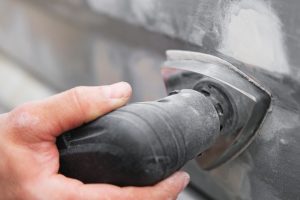
One of the most compelling arguments for mobile dent repair is the significant cost savings compared to traditional body shop repairs. Conventional dent repair typically involves filling, sanding, priming, painting, and clear coating – a labour-intensive process requiring expensive materials and controlled spray booth conditions.
Mobile dent repair eliminates most of these costs. There’s no need for paint, primer, or clear coat. Labour time is dramatically reduced, as PDR can often be completed in a fraction of the time required for traditional repairs. Without the overhead costs of maintaining a fixed premises with expensive spray booth facilities, mobile services can pass these savings directly to customers.
For minor to moderate dents, the cost difference can be substantial. Traditional body shop repairs might cost several hundred pounds, whilst mobile PDR could achieve the same result for a fraction of that price. However, it’s important to understand that not all dents are suitable for PDR – the technique works best on dents where the paint hasn’t been damaged and the metal hasn’t been stretched beyond its elastic limit.
The Convenience Factor
Beyond cost savings, convenience represents perhaps the strongest argument for mobile dent repair services. Traditional body shop repairs often require you to book your vehicle in for several days, arrange alternative transport, and work around the garage’s schedule. This disruption can be particularly challenging for people who rely on their vehicles for work or family commitments.
Mobile dent repair transforms this experience entirely. The service comes to you, whether you’re at home, work, or another convenient location. Most minor dents can be repaired within a few hours, meaning you can often have the work completed during a lunch break or whilst you’re working from home.
This convenience extends beyond just scheduling flexibility. You can observe the repair process, speak directly with the technician, and have any concerns addressed immediately. There’s no risk of your vehicle suffering additional damage whilst in someone else’s care, and you maintain complete control over your vehicle throughout the process.
Quality and Durability Concerns
Scepticism about mobile repair quality is understandable – many people assume that repairs performed in less controlled environments must somehow be inferior. However, this perception doesn’t reflect the reality of modern mobile dent repair services.
Professional PDR technicians undergo extensive training and certification. The technique requires significant skill and experience to execute properly, and reputable mobile services employ technicians with years of specialist training. At Smart Fix Autos, our technicians are fully certified and regularly update their skills to incorporate the latest techniques and technologies.
The durability of PDR repairs often exceeds that of traditional methods. Because the original paint and metal structure are preserved, there’s no risk of paint adhesion problems, colour matching issues, or the potential for rust that can occur with poorly executed traditional repairs. A properly executed PDR repair is essentially invisible and permanent.
Limitations of Mobile Dent Repair
Whilst mobile dent repair offers significant advantages, it’s important to understand its limitations. PDR is not suitable for all types of damage. Dents where the paint has been damaged, scratched, or chipped cannot be repaired using paintless methods. Similarly, very sharp dents, creases, or damage on panel edges may be beyond the scope of PDR techniques.
The size and location of the dent also matter. Whilst PDR can handle surprisingly large dents, there are practical limits to what can be achieved. Dents in areas where access is restricted may require partial disassembly of trim or interior panels, which may not be practical in a mobile setting.
Weather conditions can also impact mobile repairs. Extreme temperatures, high winds, or precipitation may prevent optimal working conditions, potentially requiring rescheduling or alternative arrangements.
Insurance and Warranty Considerations
Many people worry that choosing mobile repair over traditional body shop work might affect their insurance coverage or vehicle warranty. In reality, professional mobile dent repair is increasingly accepted by insurance companies, many of whom actively promote PDR as a cost-effective alternative to traditional repairs.
Reputable mobile repair services carry full insurance coverage and offer warranties on their work. At Smart Fix Autos, we provide comprehensive guarantees on all our PDR work and maintain full public liability insurance. Our repairs are carried out to industry standards and are accepted by all major insurance companies.
For lease vehicles or cars still under manufacturer warranty, PDR is often preferred because it preserves the original factory finish and doesn’t involve any modifications to the vehicle’s structure or appearance.
Environmental Benefits
An often-overlooked advantage of mobile dent repair is its environmental impact. Traditional body shop repairs involve significant use of chemicals, including paints, solvents, primers, and clear coats. These materials require energy-intensive manufacturing processes and generate volatile organic compounds (VOCs) during application.
PDR eliminates virtually all of these environmental impacts. No chemicals are used, no waste materials are generated, and the energy consumption is minimal. For environmentally conscious consumers, this represents a significant additional benefit beyond the cost and convenience advantages.
Making the Right Choice for Your Vehicle
The question of whether mobile dent repair is worth it depends on several factors: the type and extent of damage, your vehicle’s age and value, your budget constraints, and your personal priorities regarding convenience and environmental impact.
For minor to moderate dents without paint damage, mobile PDR typically offers superior value in terms of cost, convenience, and quality. The technique is particularly beneficial for newer vehicles where preserving the original factory finish is important for maintaining resale value.
However, if your vehicle has suffered paint damage alongside the dent, or if the damage is too severe for PDR techniques, traditional body shop repair may be necessary.
Conclusion
Mobile dent repair services represent excellent value for money when applied to appropriate damage types. The combination of cost savings, convenience, quality results, and environmental benefits makes a compelling case for choosing mobile PDR over traditional repair methods.
At Smart Fix Autos, we’ve seen firsthand how mobile dent repair can restore vehicles to pristine condition whilst saving customers time, money, and hassle. Our professional approach, combined with state-of-the-art equipment and extensive experience, ensures that you receive the same quality results you’d expect from a traditional body shop, but with the added benefits that only mobile service can provide.
The real question isn’t whether mobile dent repair is worth it – it’s whether you can afford not to consider this superior alternative to traditional repair methods.