 Electric vehicles are now a familiar sight across Kent, from the motorways into London to the quieter lanes around Maidstone, Tonbridge and Sevenoaks. EVs drive differently, feel different and, crucially, they’re often built differently under the paintwork. That raises a sensible question for owners: when your electric car picks up a scuff, scratch or dent, how does a mobile body repair actually work?
The short answer is that mobile repairs suit EVs very well, provided the technician understands a few specific things about EV panels, battery safety and charging routines.
Why mobile repairs suit electric car owners
One of the main advantages of EV ownership is home charging. Most drivers plan their week around topping up overnight, and leaving the car at a bodyshop for two or three days can throw that routine off completely. A mobile service avoids the problem entirely. The technician arrives at your home or workplace, carries out the repair where the car is already parked, and leaves without disrupting your schedule or your charging plan.
It also helps that most EV damage is cosmetic rather than structural. Bumper scuffs from tight multi-storey car parks, shopping trolley dents and stone chips from motorway driving are all typical, and none of them need a full garage visit.
What’s different about EV panels
Electric cars often rely on aluminium for key body panels, particularly bonnets, boot lids and doors. Aluminium is lighter than steel, which directly improves range, but it behaves differently when it’s damaged. It doesn’t flex back into shape as readily, it can crack under heavy pressure, and it needs carefully controlled heat during repair. A technician experienced with EVs will identify the panel material quickly and select the correct approach.
| Panel type | Commonly found on | Repair approach |
|---|---|---|
| Aluminium bonnet or boot lid | Tesla, Jaguar, Audi e-tron, Polestar | Controlled heat, specialist shaping tools, dedicated filler |
| Steel doors and wings | Mid-range EVs and hybrids | Standard paintless or filled dent repair |
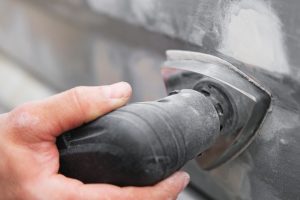
| Plastic bumpers | Nearly all EVs | Plastic welding, filling, sanding, colour-matched repaint |
| Composite panels | Luxury and performance EVs | Assessment first; specialist referral if needed |
Battery safety comes first
The defining feature of any EV is the high-voltage battery pack beneath the floor. According to the Department for Transport’s guidance on recovery operators working with electric vehicles, these systems can operate at up to 1,500 volts and demand proper care from anyone working on the vehicle.
For routine cosmetic repairs this is rarely an issue, but a responsible technician will still take sensible precautions: avoiding heavy impact near the battery pack, keeping heat tools well away from the underside of the car, watching for orange high-voltage cabling, and isolating the 12-volt system if deeper work becomes necessary.
Charging-friendly, Kent-wide service
Most bumper and panel work takes place well away from the charging port, so you can usually keep the car plugged in throughout. If the damage is close to the charge flap, the technician may briefly disconnect and reconnect the cable.
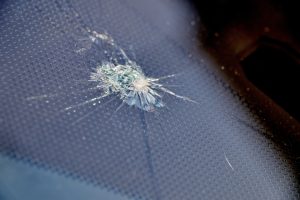
In Kent, the most common EV jobs we handle are bumper scuffs from multi-storey car parks, door dents from shopping trolleys, and motorway stone chips. Our bumper repair service tackles the first, mobile dent repair handles the second, and our wider range of smart repairs in Kent covers everything in between.
Most minor repairs are completed in two to four hours. Your car stays on your drive, your charging schedule stays intact, and the finish matches the original paintwork seamlessly.